_edited_edited.png)
.png)
Foods for Yeast Infection Support
Targeted Vaginal Microbiome Support | Blood Sugar Balance | Fiber + Protein Plate Rhythm | 15-Minute Prep
3 Core Nutrition Support Pillars
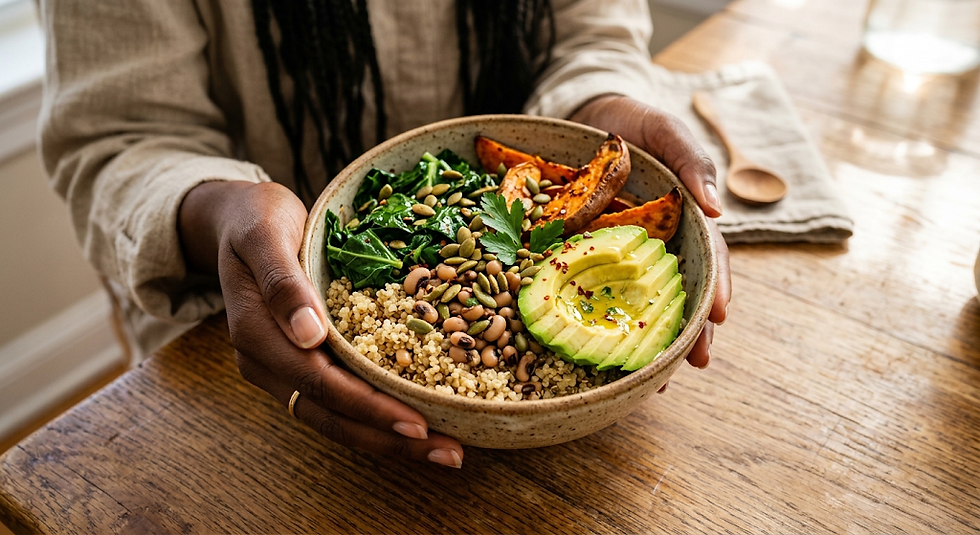
• Low-Glycemic Fiber Plate: Build meals with vegetables, beans, lentils, berries, seeds, and balanced whole-food carbohydrates. This helps keep blood sugar steadier, which matters because frequent sugar spikes may make yeast overgrowth easier for some people, especially with insulin resistance, diabetes, or recurrent infections.
• Vaginal + Gut Microbiome Support: Emphasize fiber-rich plant foods, prebiotic foods, and plain unsweetened cultured foods if tolerated. The goal is not a “yeast cleanse.” The goal is to support the gut and vaginal environment so helpful bacteria can thrive.
• Anti-Inflammatory Souliterranean Flavor Matrix: Use olive oil, garlic, onion, herbs, lemon, vinegar, ginger, turmeric, cinnamon, leafy greens, okra, cabbage, beans, nuts, and seeds to keep meals flavorful and culturally familiar. This helps reduce reliance on sugary foods, ultra-processed snacks, and irritating “quick fixes.”
5-Day Meal Plan
Use this section as a simple, repeatable yeast-supportive meal rhythm.
Foods List
Use this section to organize foods by the actual nutrients or food compounds that support yeast infection recovery, recurrence prevention, blood sugar balance, gut health, immune resilience, and tissue comfort.
The 5-4-3-2-1 Minimalist Grocery Strategy
To keep the kitchen workflow simple and reduce food waste, use the 5-4-3-2-1 shopping method. Choose 15 core items for the week.
This yeast-supportive list is designed to support blood sugar balance, gut health, vaginal microbiome resilience, and plant-based Souliterranean meals.
|
5 Vegetables, choose any 5
Pick a mix of leafy greens, crunchy raw options, cruciferous vegetables, colorful choices, and quick-cooking options.
Collard greens (Leafy green + fiber)
Spinach (Versatile leafy green)
Kale (Sturdy leafy green)
Cabbage (Budget-friendly cruciferous vegetable)
Broccoli (Fiber + antioxidants)
Okra (Souliterranean fiber-rich option)
Cucumbers (Hydrating raw option)
Bell peppers (Vitamin C + color)
Carrots (Crunchy snack + fiber)
Tomatoes (Antioxidant-rich flavor builder)
Zucchini or squash (Quick-cooking veggie)
Cauliflower rice (Low-glycemic plate builder)
Mushrooms (Savory flavor + meal volume)
Celery (Crunch + soup base)
Leafy salad mix (Fast no-cook option)
4 Fruits, choose any 4
Select fruit that supports fiber, antioxidants, hydration, and natural sweetness without leaning on refined sugar.
Blueberries (Antioxidants + low-glycemic sweetness)
Strawberries (Vitamin C + fiber)
Raspberries or blackberries (High-fiber berries)
Apples (Crunchy soluble fiber)
Pears (Gentle fiber)
Oranges or mandarins (Vitamin C)
Kiwi (Vitamin C + fiber)
Lemons (Flavor building)
Limes (Flavor building)
Grapefruit (Citrus option, check medication interactions)
Green-ish bananas (Resistant starch option)
Frozen mixed berries (Budget-friendly smoothie option)
3 Proteins / Healthy Fats, choose any 3
Focus on plant proteins and healthy fats that support fullness, blood sugar balance, gut health, and immune resilience.
Lentils
Black-eyed peas
Chickpeas
Black beans
Red beans
Tofu
Tempeh
Edamame
Plain unsweetened Greek yogurt or kefir, if tolerated
Plain unsweetened plant-based yogurt with live cultures
Chia seeds
Ground flaxseed
Hemp seeds
Walnuts
Avocado or tahini
2 Whole-Food Carbohydrates, choose any 2
Pick fiber-rich carbohydrates that provide steady energy and pair well with protein and vegetables.
Certified gluten-free rolled oats
Steel-cut oats
Quinoa
Black rice
Millet
Buckwheat
Sweet potatoes
Plantains, balanced portion
Beans as a starch-protein combo
90-second quinoa pouches
Gluten-free whole-grain wraps, if tolerated
1 Joy Item, choose 1
Allow one favorite snack, drink, dessert, or flavor booster so the plan feels doable.
Dark chocolate (70% cacao or higher, small portion)
Unsalted popcorn
Sparkling water with citrus
Mint tea
Ginger tea
Cinnamon apples
Berry chia pudding
Homemade trail mix with unsalted nuts and seeds
Tahini-lemon sauce
Salt-free Souliterranean seasoning blend
Note: This list assumes basic pantry staples are available, such as extra virgin olive oil, vinegar or citrus, garlic, onion, herbs, cinnamon, ginger, turmeric, salt-free seasonings, unsweetened teas, and gentle sauces.
|